Adopt Sirius the Humpback Whale - He is unique
Sirius the black flippered whale
Humpback whales are normally named based on unique black-and-white pigmentation patterns and scars on the underside of their tail flukes. Sirius is no exception. The center of his tail pattern has a solid black column with a large white dot. At the whale naming party, one individual suggested that this resembled the brightest star in the sky – the dog star – Sirius.
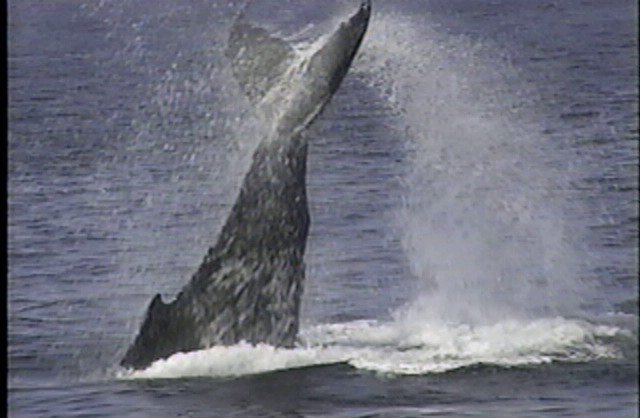
Sirius quickly became a favorite of whale watchers by his loud blows and trumpet like sounds. He also was seen performing headstands and waving his flippers in the air as if to say hello. Flipper slapping and lobtailing seem to be his favorite exercise routine.
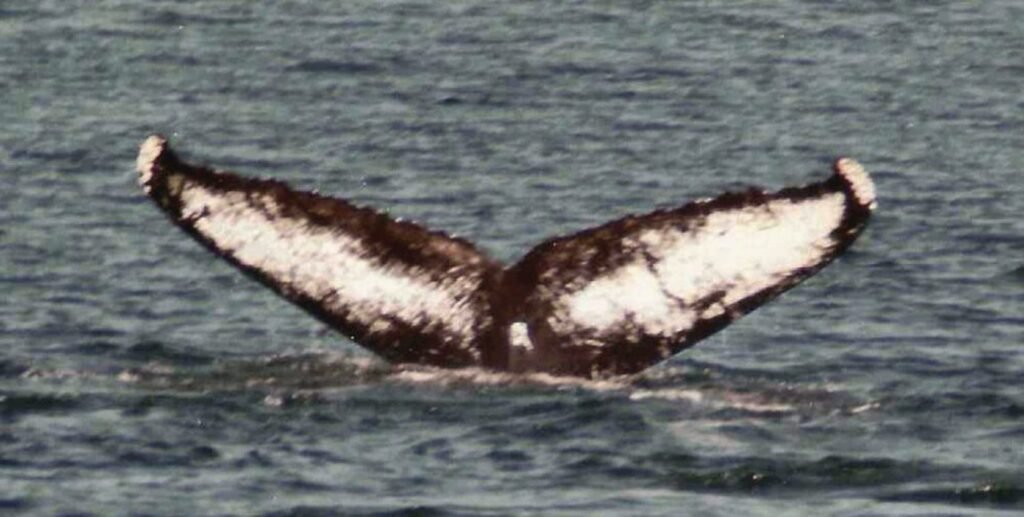
Sirius Fluke © International Wildlife Coalition
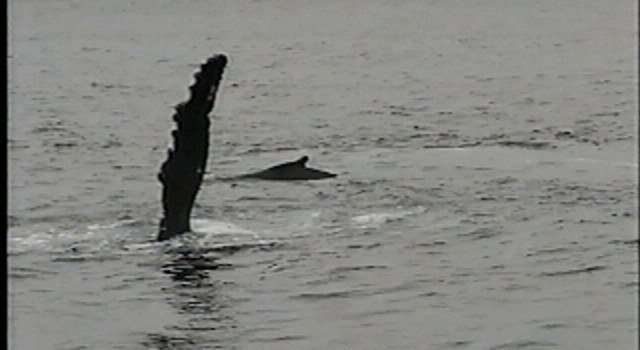
Sirius has black flippers—a rare trait in Atlantic humpback whales (A scene from Sirius' adoption video)
Sirius lobtailing (A scene from Sirius' adoption video)
Sirius’ Story
Sirius: A Unique Humpback Whale of the Gulf of Maine
Sirius is a standout among humpback whales in the Gulf of Maine, distinguished by his rare ** black pectoral flippers**. While most humpbacks in this region have predominantly white flippers (with varying black markings on the dorsal side), Sirius is one of the few with nearly solid black pigmentation on the top of his exceptionally long (up to 15-foot) flippers. This trait is far more common in Pacific populations, making him particularly unique in North Atlantic waters.
Born in 1982 to a mother named Fringe, Sirius is now in his mid-40s—a prime middle-aged adult for a species that can live 80–90 years or longer. Humpback whales (*Megaptera novaeangliae*) are migratory baleen whales renowned for their acrobatic breaches, elaborate songs (primarily sung by males on breeding grounds), and highly individualistic tail fluke patterns, which serve as “fingerprints” for photo-identification by researchers.
Sirius earned his name from the bright, circular white marking in the center of his tail flukes, evoking Sirius—the brightest star in the night sky (also known as the Dog Star). Like many Gulf of Maine humpbacks, he bears scars from past entanglements in fishing gear, a common threat in these busy waters. You can see one cut in his tail stock.
One of Sirius’s most memorable moments came during a feeding session on sand lances (a favorite prey). He employed **kick-feeding**, an innovative technique unique to (or at least pioneered in) the Gulf of Maine population: The whale forcefully slaps its powerful tail on the surface near a school of fish, creating a startling bubble cloud that confuses and herds the prey into a tight ball. The panicked fish seek refuge in the bubbles, only for Sirius to lunge upward from below with his mouth agape, engulfing thousands in a single gulp.
As he surfaced, water gushed out through his baleen plates—fringe-like filters in his upper jaw that trap fish while expelling water. Opportunistic herring gulls often exploit these moments, darting into the whale’s partially open mouth or perching on its lower jaw to snatch escaping fish. On this occasion, one gull lingered too long, and Sirius inadvertently closed his mouth around it before it could escape—a rare but documented mishap during lunge or kick-feeding.
Sirius’ Video Documentary (40 Min)
A thrilling 40-minute documentary offers fascinating insights into Sirius’ life, perfectly capturing why the name “unique” fits him so well.
Sirius is a remarkably confident humpback whale who regularly surprises passengers by approaching boats at very close range, sometimes accompanied by other whales in the Ultimate Whale Adoption Program.
Scenes in the documentary show the distinctive black pigmentation on his flippers, not the usual coloring for North Atlantic humpback whales. This helps to identify Sirius at great distances.
Throughout the program, Sirius displays the full repertoire of mature humpback whale behaviors with remarkable grace:
- Deep, prolonged dives
- Bubble-net feeding using powerful tail kicks
- Spectacular open-mouth lunge feeding at the surface
- Flipper slapping
- Lobtailing (tail slapping)
- Curious, confident approaches to boats
- Powerful, acrobatic breaching – one surprise breach next to the boat
These behaviors illustrate the dynamic and energetic life of humpback whales in their natural environment.
Sirius’ Family Tree
Sirius’ Family Tree
Sirius’ mother is a whale named Fringe. She was first sighted in 1979. Fringe gave birth to Sirius in 1982 and Thread in 1984, two brothers in the Ultimate Whale Adoption program.
Fringe’s Calves and year born
Tassel 1979
Sirius 1982
Thread 1984
Paris 1986
Tornado 1988
Brittlestar 1990
Molar 1993
Fiber 1997
Freestyle 1999
TORNADO CALVES
(FRINGE GRANDCALVES)
Parallel 1995
Mas-Menos 1998
Beanie 2000
Sirius’ Friends
Humpback whale relationships are very short term lasting a few hours or a few days.
Determining whether whales form true friendships or merely tolerate certain companions is challenging, but when multiple humpbacks approach a boat together and move in coordinated harmony, it’s reasonable to describe them as friends—or at least close associates.
Colt and Agassiz have been sighted with Sirius on several occasions investigating boats together.