Adopt Mars the Humpback Whale - She is gnarly
Mars is widely regarded as one of the most iconic female humpback whales in the world, often considered second only to the legendary Salt in fame.** A long-time resident of the rich feeding grounds around Stellwagen Bank, Mars is instantly recognizable by the unique black-and-white pattern on her fluke and the deep scars and cuts she carries from a past entanglement with fishing gear, likely ropes or discarded nets. Her dorsal fin is sharply hooked and marked with extensive white scar tissue, making her identifiable even when her fluke isn’t visible.
Mars has a daughter named Nile and a son named Seal, making them **one of only two multi-generational families** represented in the Cetacean Society International Ultimate Whale Adoption Program.
Mars is known for her curious behavior around boats. **She frequently brings her calves in close — often within just a few feet — allowing them to experience the sights and sounds of engines, generators, and people on board.** This boldness around vessels appears to be a family trait. Four of her offspring — Seal, Nile, Aswan, and Mesopotamia — have grown into particularly bold explorers, often approaching boats during whale-watching trips even as adults.
These interactions and the strong bonds Mars forms with her young are featured in her official documentary, which spans approximately 26 minutes. **The film provides an intimate look at her relationship with her calves and showcases many classic humpback behaviors — from feeding and breaching to flipper-slapping and lobtailing — offering viewers a memorable glimpse into her personality and life at sea.
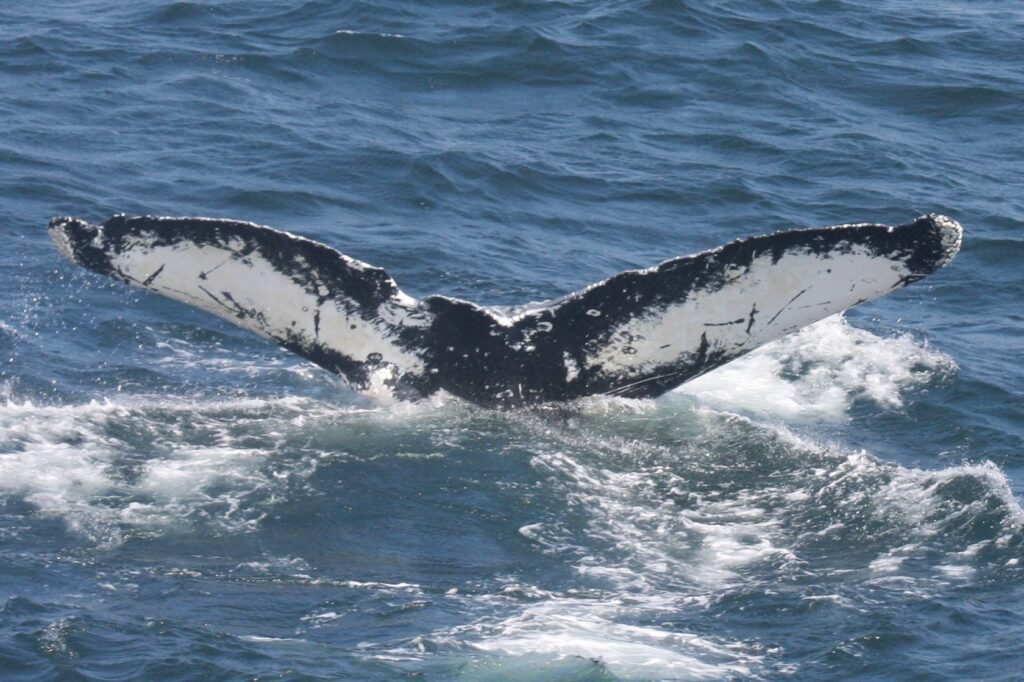
Mars Fluke ( Entanglement Damage) Left Side © Dolphin Fleet of Provincetown
Mars' Dorsal Fin Left Side Scars © The Whale Video Company
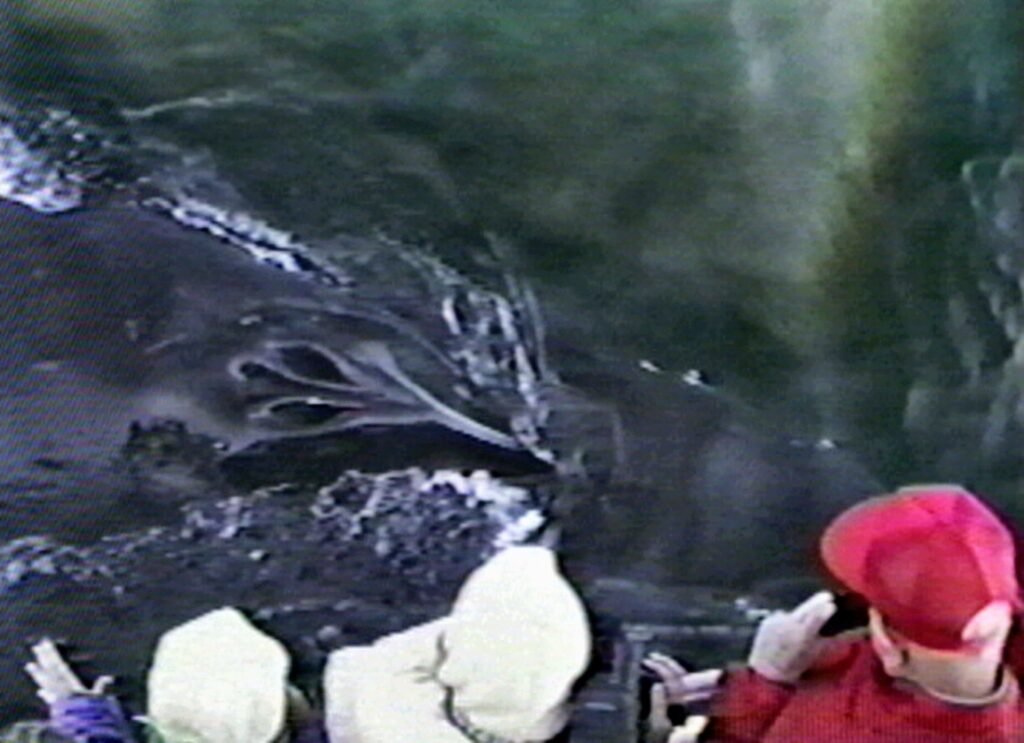
Mars' Blowholes Open © The Whale Video Company
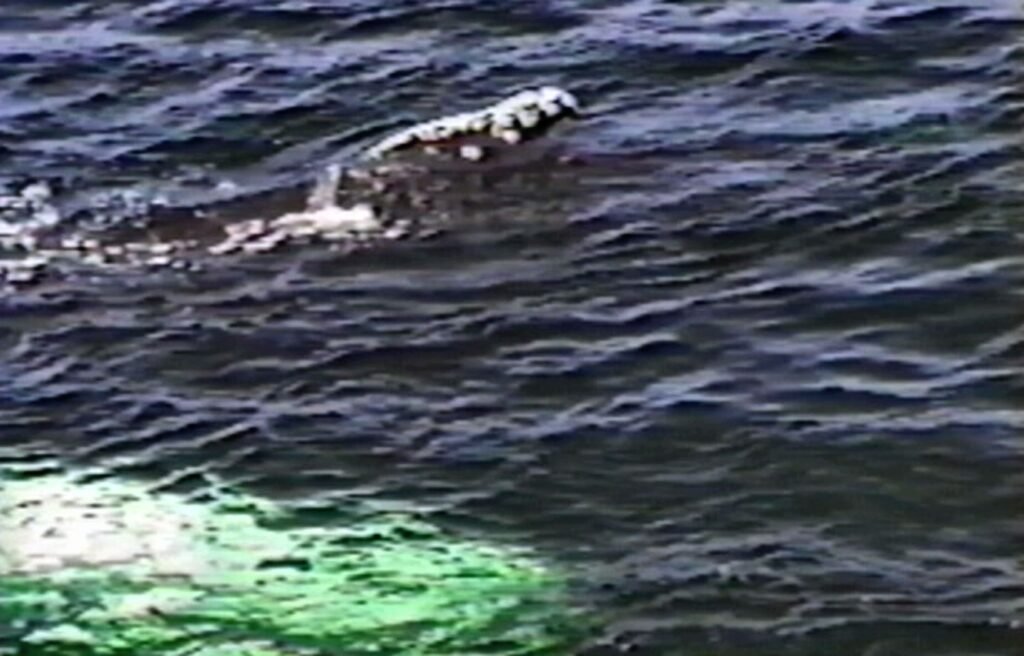
Mars' Dorsal Fin Left Side Scars (A scene from Mars' adoption video)
Mars' Blowholes Open (A scene from Mars' adoption video)
Mars Facts
Mars is gnarly
Mars is regarded as one of the most famous female whales in the world, perhaps only second to Salt.
Mars was named for the Roman God of War. Sighted for the first time in 1979, Mars showed signs of injuries on her fluke and dorsal fin. Not from battle but from being entangled in lines or fishing nets. Her tail shows entanglement scars and one huge knot where tail tissue grew out into a ball of sorts. The left side of her dorsal fin also has white scars probably from the same entanglement which today is a major problem for all species of whales.
Mars’ dorsal fin shape is sharply hooked with lots of white scar tissue. This helps with identification when her fluke is not seen.
Mars brings her calves over to the boats—often within a few feet—so they can experience the sights and sounds of the engines, generators and perhaps the people on board.
“Four of Mars’ calves——Seal, Nile, Aswan and Mesopotamia are particularly bold explorers around boats. These four frequently approach boats even now as adults for close-up encounters, a behavior that forms some of the highlights of Mars’ official 26-minute documentary. The film offers an intimate portrait of Mars’ relationship with her calves while showcasing many of her characteristic behaviors, including feeding, breaching, flipper-slapping, and lobtailing.”
Mars’s Video Documentary
The Ultimate Whale Adoption includes a captivating 26-minute documentary that chronicles Mars’ life and reveals exactly why she earned the nickname “Gnarly.” Throughout the film, viewers witness Mars effortlessly perform the full repertoire of mature humpback whale behaviors, each displayed with power, curiosity, and grace.
One especially memorable moment features a video clip of special significance, capturing Mars’ playful habit of blowing on onlookers who peer down at her from the railing.
The documentary highlights a wide range of remarkable behaviors, including:
- Kick-feeding as she creates bubble nets with powerful tail thrusts
- Spectacular open-mouth lunge feeding at the surface
- Flipper slapping and dramatic lobtailing
- Curious, confident approaches to boats
- Powerful, acrobatic breaching
- Deep, prolonged dives that reveal her distinctive fluke pattern
Together, these moments offer an intimate and unforgettable look at the personality and prowess of this extraordinary humpback whale -Mars truly is one-of-a-kind.
Mar’s Family Tree
Mars’ birth year and mother are unknown,
Mars’ Calves and year born
Felis 1982
Seal 1984
Excalibur 1985
Nile 1987
Mesopotamia 1990
Putter 1993
Valentine 1997
Unnamed 2004
Jupiter 2009
Unnamed 2012
Unnamed 2016
Having calves in consecutive years is a rare event for humpback whales. Seal and Excalibur were born in 1984 and 1985.
Nile’s calves (Mars Grandcalves)
Amazon 1998
Aswan 2000
Playground 2007
Teacup 2009
Sprinkles 2014
Unnamed 2016
Mars’s Friends
Humpback whales generally form short-term associations, often lasting only a few hours to days, particularly on breeding grounds where competitive groups involving males are common.
The most enduring bond is typically between a mother and her calf, which lasts about 11–12 months, including weaning around 10–11 months of age. After weaning, mothers and calves usually separate permanently, with no long-term post-weaning associations expected in most cases.
However, the well-known female humpback whale named **Mars** (first documented in 1979 in the Gulf of Maine) provides notable exceptions to this pattern. Mars has been repeatedly sighted years after weaning with former calves such as Nile and Seal.
She also frequently travels in small, temporary groups with unidentified humpbacks. Additionally, Mars has been observed socializing with other recognizable individuals, including the friendly male Colt and the male known as Splice—these interactions are featured in her adoption program video from the Cetacean Society International.
In one particularly rare event, Mars was sighted accompanied by two of her grown adult offspring, Seal and Mesopotamia, simultaneously—an uncommon occurrence given the species’ typical social fluidity and lack of persistent family groups beyond the nursing period. Such observations highlight intriguing individual variations in humpback whale behavior within studied North Atlantic populations.