Adopt Pepper the Humpback Whale - She is reliable
Humpback whales are typically identified by the unique black-and-white patterns on the undersides of their tail flukes, along with distinctive marks and scars on their dorsal fins or bodies.
However, two iconic females in the Gulf of Maine—**Salt** and **Pepper**—became famous for an exception to this rule. In the mid-1970s, during the early days of commercial whale watching off Cape Cod, a captain named Aaron Avellar spotted a pair of humpbacks traveling together. One had a strikingly white, scarred dorsal fin that resembled a sprinkling of salt, while her companion had a solid black dorsal fin with no visible scarring.
Inspired by the contrast, he dubbed them **Salt** and **Pepper**. Salt (first sighted in 1975) became one of the most famous humpback whales in the world, while Pepper earned her name through her frequent companionship with Salt.
Remarkably, both Salt and Pepper have been sighted regularly for nearly 50 years and remain alive and active as of 2025.
Pepper was entangled in July 2009 but survives today.
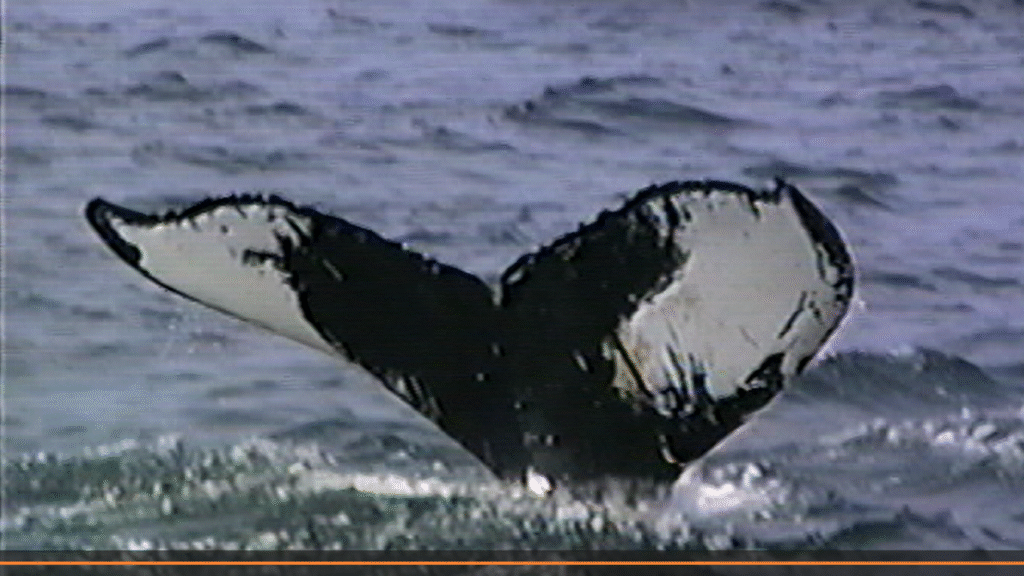
Pepper's Fluke © Dolphin Fleet of Provincetown
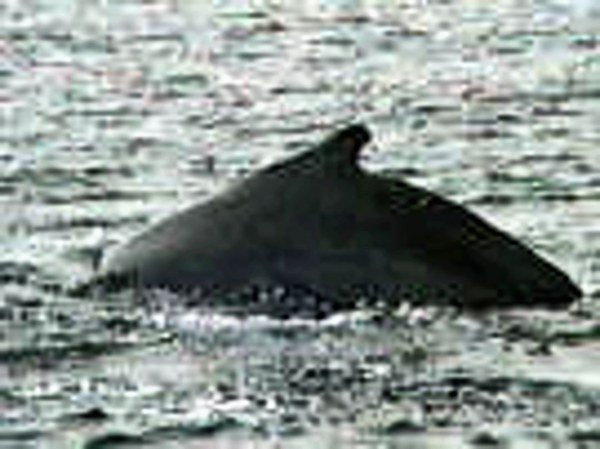
Pepper's dorsal left side (A scene from Pepper's adoption video)
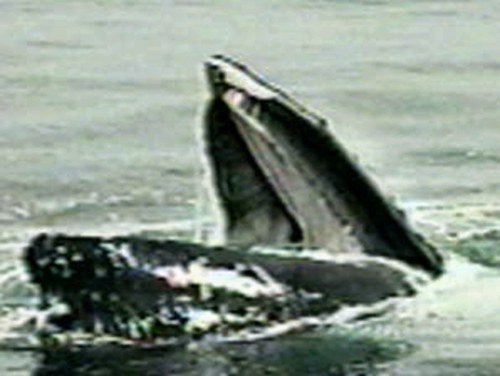
Pepper open mouth feeding (A scene from Pepper's adoption video)
Pepper Facts
How Pepper was named
In the mid-1970s, as commercial whale watching began off the coast of Massachusetts, a distinctive female humpback whale was first documented in the Gulf of Maine. Her dorsal fin featured extensive white scarring that resembled a sprinkling of salt, earning her the name **Salt** from Captain Aaron Avellar of the Dolphin Fleet. On the same early trips, her frequent companion—a whale with a solid black dorsal fin—was aptly named **Pepper**.
Salt and Pepper quickly became two of the first individually named humpback whales in the region, kickstarting a tradition of photo-identification that has helped researchers track thousands of individuals ever since. Their names were inspired directly by the contrasting appearances of their dorsal fins, rather than the more common practice of naming based on tail (fluke) patterns or scars.
While most humpback whales in the Gulf of Maine are named for unique markings on their flukes or bodies, some calves receive names themed around their mother’s. Pepper, a prolific mother with at least 10 documented calves, has several offspring following a “spicy” theme:
– **Paprika** and **Habanero** (also spelled Habenero in some records), both named after spices.
– **Siete**, possibly evoking a brand of spicy foods or sauces, continuing the hot-and-fiery motif.
Pepper has been a known grandmother for years. For instance, her calf Habanero (born around 2000) was later seen with her own calf as early as 2008, making Pepper a proud grandmatriarch. Many of these grandcalves have gone on to be named and tracked, though some younger ones remain unnamed until they are reliably re-sighted in subsequent years.
Salt, meanwhile, is one of the most famous and studied humpbacks in the world, with a family tree that includes numerous calves (often named by the Avellar family in a salt/seasoning theme) and multiple generations of descendants.
These pioneering whales and their families continue to provide invaluable insights into humpback biology, migration, and social structure through ongoing research by organizations like the Center for Coastal Studies.
Pepper’s Video Documentary
### The Ultimate Whale Adoption: Discover Pepper’s Extraordinary World
Dive into an immersive 32-minute documentary that brings to life the captivating story of Pepper, a legendary humpback whale whose consistent presence and remarkable behaviors have earned her a special place in the hearts of researchers and whale watchers alike.
Throughout the film, you’ll witness Pepper showcasing the full spectrum of mature humpback whale behaviors—executed with unmatched power, curiosity, and grace.
Highlights include:
– A heartwarming and rare clip of Pepper alongside her yearling calf, Zenith, near a boat. Unusually, Zenith remained with his mother for an extra year beyond weaning—a testament to Pepper’s exceptional maternal care.
– Tender scenes with two of her other calves: Tadpole, and Habanero (captured nursing, offering a rare glimpse into humpback family bonds).
The documentary showcases Pepper’s impressive repertoire of behaviors, including:
– Kick-feeding, where she expertly creates bubble nets using powerful tail thrusts to corral prey
– Dramatic open-mouth lunge feeding at the surface
– Playful flipper slapping and forceful lobtailing
– Confident, curious approaches to boats
– Spectacular, acrobatic breaches that defy gravity
– Deep, extended dives revealing her unique fluke pattern
These intimate moments paint a portrait of a truly one-of-a-kind humpback whale—Pepper’s personality, strength, and reliability shine through, making this an unforgettable journey into the life of an ocean icon.
Pepper’s Family Tree
Pepper’s birth year and mother are unknown.
Pepper’s Calves and year born
Aurora 1982
Siete 1986
Tadpole 1989
Paprika 1992
Zenith 1996
Bishop 1998
Habenero 2000
Unnamed 2003
Striation 2007
Unnamed 2011
Pepper’s Grandcalves
Habenero calves
Unnamed 2008
Unnamed 2012
Pepper’s Long Term Friendship
Humpback whale relationships are very short term lasting a few hours or a few days.
The most enduring bond is between a mother and her calf. Calves nurse for approximately 10–11 months, gaining independence around their first birthday as they transition to solid food on the feeding grounds. Most separate from their mothers after about one year, though they often return to similar migratory routes and areas.
In exceptional cases, some calves remain associated with their mothers longer. Pepper, a well-known female humpback first identified in 1976 (often called a “southpaw” for her left-flipper preference), is notable for this. Two of her calves—**Zenith** and **Habanero**—were observed staying by her side for two full years, even after full weaning the previous season. Researchers attribute this extended association to Pepper’s exceptional maternal care.
Zenith also survived a severe boat strike in 1998 that left a large gash on his back. The wound fully healed, leaving a scar but without impairing his feeding, mobility, or long-term survival.