Adopt Coral the Humpback Whale - He is the luckiest
Coral is a survivor, though physically challenged he is entering his fourth decade of life.
Coral is an incredibly lucky whale; in fact, his survival is nothing short of a miracle. Some would say his luck comes from having Silver for a mother. Despite having only half a tail, Silver managed to swim 1,500 miles south to the breeding grounds—an unimaginable physical feat.
However, her true strength was proven when Coral was just a nursing calf. He survived a vicious killer whale attack because Silver protected him, keeping her injured body between Coral and the predators. To this day, you can see the evidence on the underside of Coral’s flukes: short, parallel black lines left by orca teeth marks.
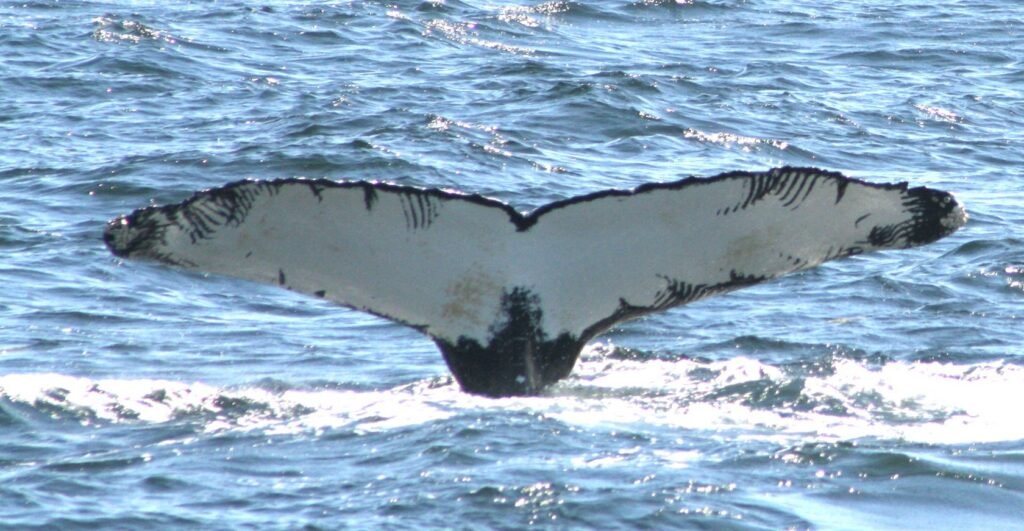
Coral's Fluke (Note Teeth Marks) © Cynde McInnis
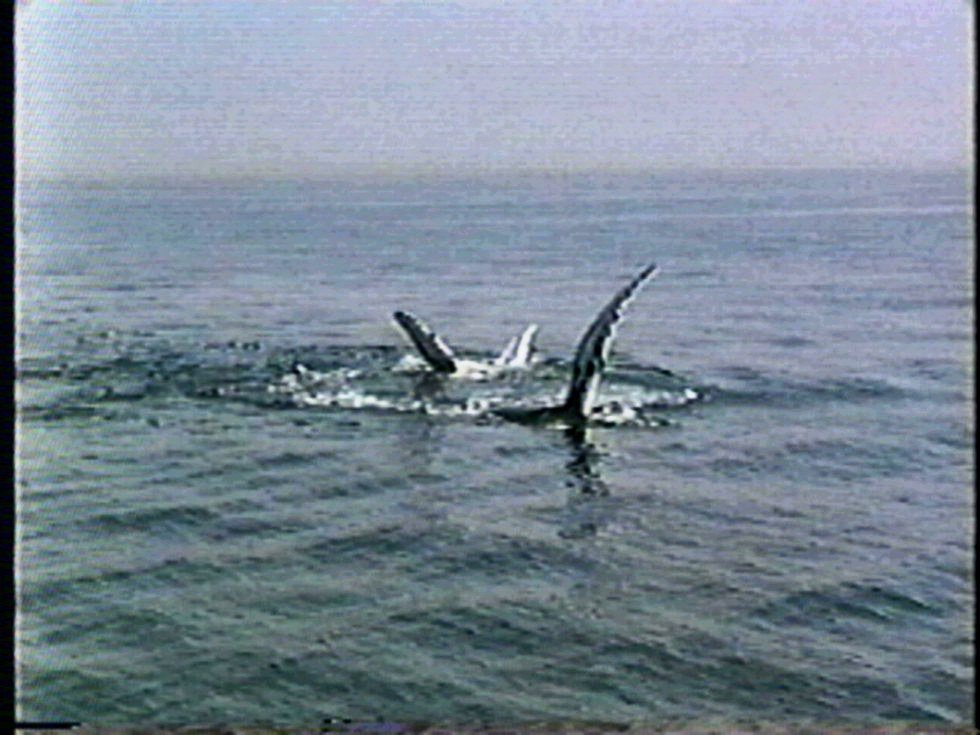
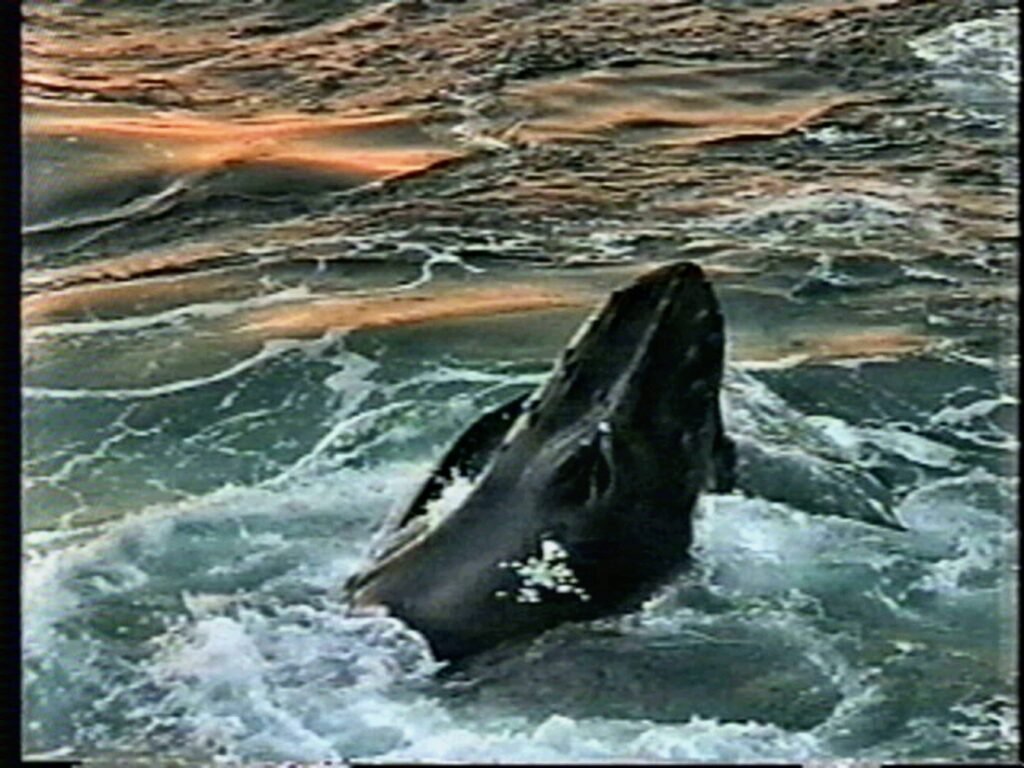
Coral flipperslapping with Silver (A scene from Coral's Adoption Video)
White scars near Coral's blowholes (A scene from Coral's Adoption Video)
Coral Facts
Coral’s Story
Coral: The luckiest Humpback Whale.
Coral has a place in whale history as one of the luckiest calves. His mother. Silver was the first officially verified Grandmother.
Coral was named after the black scars on his fluke that resemble coral heads. These scars (called rake marks) were left after a killer whale attack on young Coral, in 1988.
Humpback mothers are known to defend their newly born calves from the killer whale pods. The attack likely occurred during the long journey north to the whale feeding grounds of Stellwagen Bank when Coral was just three or four months old.
Other Easy Identification Marks
– Large round white scar just behind his blowholes (visible from far away when he surfaces)
– Unique mostly white fluke (tail) pattern and dorsal fin shape recorded in humpback photo-ID catalogs.
Coral saves the day
On one four hour whale watch trip, where nothing was sighted, not a whale, dolphin or seal. All the passengers were disappointed, and all hope lost as the boat rounded Long Point Light heading to the dock in Provincetown Harbor.
A whale suddenly breached near the vessel, three times in quick succession. It was Coral breaching to loud cheers from everyone on board. Coral turned what had been a disappointing trip into an unforgettable experience.
Coral’s Video Documentary (29 Min)
Coral is a captivating 29-minute documentary that immerses viewers in the remarkable life of one of the most extraordinary humpback whales ever documented. Unlike most nature films, this documentary follows Coral from his earliest days as a calf alongside his mother, Silver, capturing an intimate and rare portrait of development and learning in the wild.
Watch early footage of young Coral observing and practicing essential whale behaviors under Silver’s guidance. Viewers see him flipper-slapping, rolling, spyhopping, and refining other behaviors critical to survival — giving a unique look at the learning curve of a young humpback.
One of the documentary’s highlights is its clear demonstration of feeding techniques, including kick-feeding, where powerful tail movements create bubble nets to corral fish before engulfing them with open jaws.
Before the annual naming celebration — when whales are officially named — Coral earns his playful nickname, “Triple Kicker,” due to his habit of slamming the water with his tail three times in succession, rather than the usual one, driving schooling fish into swirling clouds of bubbles.
As Coral matures, the film showcases his evolution into a seasoned adult, featuring a full repertoire of classic humpback behaviors, including:
• Deep, sustained dives
• Kick-feeding with expertly formed bubble nets
• Spectacular surface lunge feeding
• Flipper-slapping and lobtailing
• Curious, confident approaches toward boats
• Thrilling breaches
In addition to Coral, the documentary features appearances by other adopted whales, including Sockeye, Sirius, and Thread, offering a broader glimpse into the varied personalities and lives of these magnificent marine mammals.
Coral’s Family Tree
Coral is a well-known male humpback whale who was born in 1988 to a whale named Silver, first sighted in 1979.
Silver became one of the most recognized whales in her region, known for her distinctive markings and having just half a fluke easily identified her when diving deep.
She produced a series of calves throughout the 1980s and into 1990, helping establish one of the most documented humpback whale families.
Silver’s calves included:
• Beltane, born in 1980, who later became a mother herself (1985) and helped make Silver the first whale known to be a Grandmother.
• Aster, born in 1983.
• Peninsula, born in 1985.
• Coral, born in 1988, who grew into a prominent male within the population.
• Chablis, born in 1990.
How Silver was named.
In 1979, researchers observed a humpback whale with just half a tail, likely the result of entanglement in fishing gear. Because of this injury and the difficulties in identifying the sex of a whale, she was initially identified as a male and named “Long John Silver,” after the fictional pirate with a missing leg in Treasure Island.
The following year, in 1980, she was spotted again — this time with a calf, indicating she was actually female. At that point, Long John Silver was not an appropriate name for a new mother and was shortened to Silver.
Coral’s Friends
Humpback whale relationships are very short term lasting a few hours or a few days.
Determining whether whales form true friendships or merely tolerate certain companions is challenging, but when multiple humpbacks approach a boat together and move in coordinated harmony, it’s reasonable to describe them as friends—or at least close associates.
Coral is the only male in the adoption program who was videotaped with his mother during the year of his birth (1988). The adoption footage shows Coral and Silver flipper-slapping together, traveling side by side, and displaying several other behaviors.
Over the years, Coral has been documented in numerous close, playful encounters with other well-known humpback males, including Sirius (noted for flipper-slapping) and while feeding alongside Sockeye and Thread.
In 2001, Coral was observed feeding with a female named Giraffe, and in 1997 he was seen traveling with Thalassa and Midnight—both recognized by their high fluking dives.